
Victoria All Ages and Abilities (AAA) Bike Network
Building a connected network of protected cycling routes across Victoria, one corridor at a time.
Client: City of Victoria
Location: Victoria, BC
Project Type: Transportation, Municipal
About This Program
The City of Victoria began building out it’s All Ages and Abilities (AAA) bike network in 2016, and since 2019, ISL has worked with the City to turn many more of the corridors in its plan into streets people use every day. As prime consultant, ISL has led the design and construction of over 10 key corridors in the network. Together they include more than protected bike lanes, local street bikeways and multi-use pathways that link neighbourhoods to downtown and tie into the regional cycling network.
The projects have included many different facility types along the way, our work beginning with the Harbour Road protected bike lane that connected the Galloping Goose Regional Trail safely to downtown. The Vancouver/Graham corridor provided a continuous north-south route through the city featuring local street bikeway improvements in the outlying areas and protected bike lanes in the centre, closing the loop between the previously completed protected bike lanes on Fort Street Phase 1 and Pandora Avenue Phase 1.
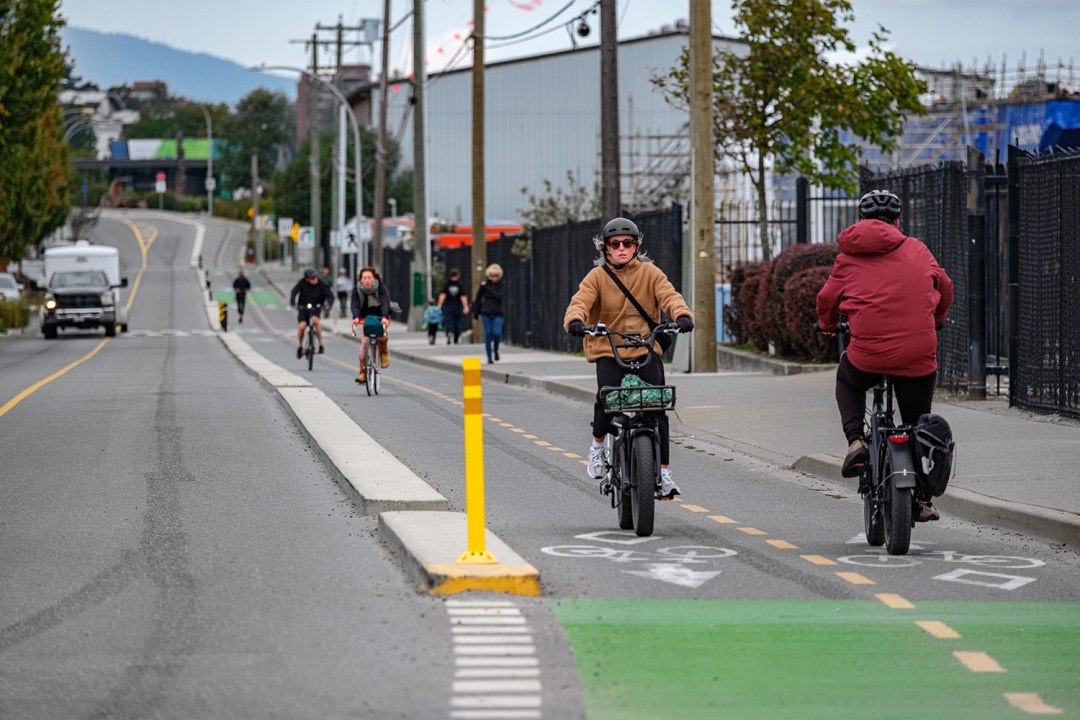
With the Downtown loop complete, our work has extended the bike network out across the city, to the east on the Kings/Haultain and Richardson local street bikeways as well as the Fort Street protected bike lanes. To the north, our work has extended the network along Government Street and Blanshard Street, and west along Gorge Road and the Kimta/E&N Regional Trail Connector. Today, our work continues the expansion of the network into new neighborhoods on Phase 2 of Pandora Avenue, Yates Street, and Begbie Street.
On every corridor, the team helped refine the City’s concept designs, further developed the detailed designs, and supported the City with tender and construction administration.
Key Features
- Protected Cycling Facilities: Uni- and bi-directional protected bike lanes on Harbour Road, Vancouver Street, Government Street North, Kimta Road, Fort Street and Gorge Road, separated from traffic with concrete curbs, precast barriers for interim treatments, and flexible delineation where the lane is parking protected, and integration of bicycle parking corrals where space permitted.
- Local Street Bikeways: Low-volume, low-speed residential routes on Richardson Street, Kings Road, Haultain Street, Vancouver Street and Graham Street, with speed humps, sharrow markings, turn restrictions and modal filters, some designed as small public plazas.
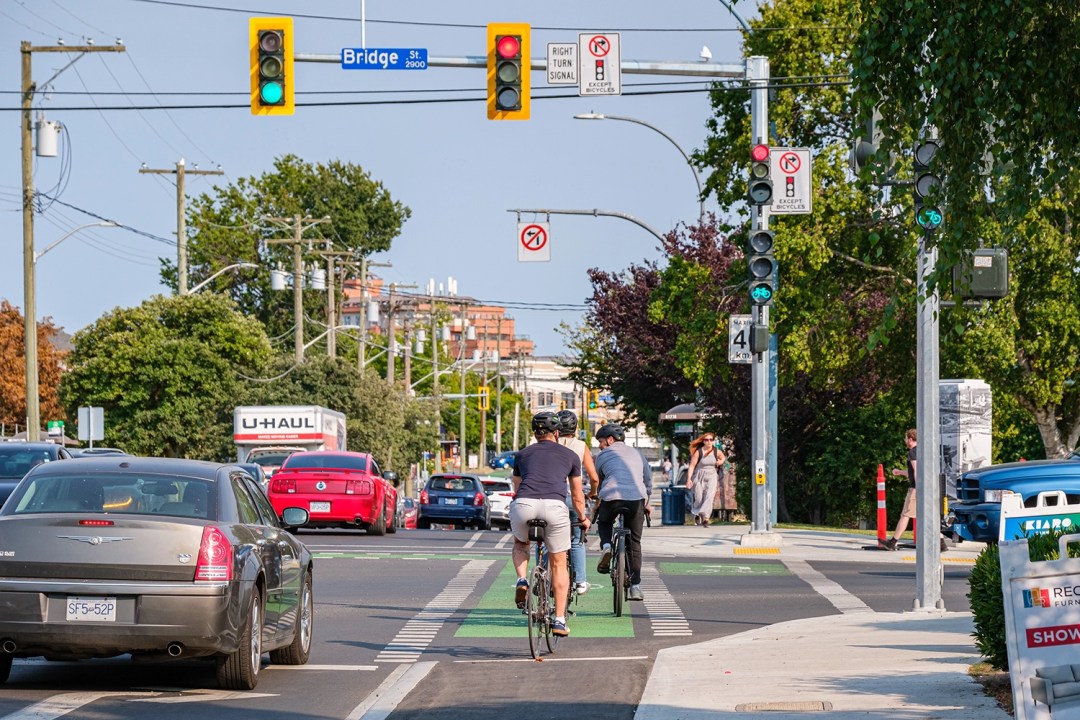
- Signals and Lighting: Signal infrastructure renewal, bicycle signals, pedestrian signals, Rectangular Rapid Flashing Beacons (RRFBs) and street lighting upgrades.
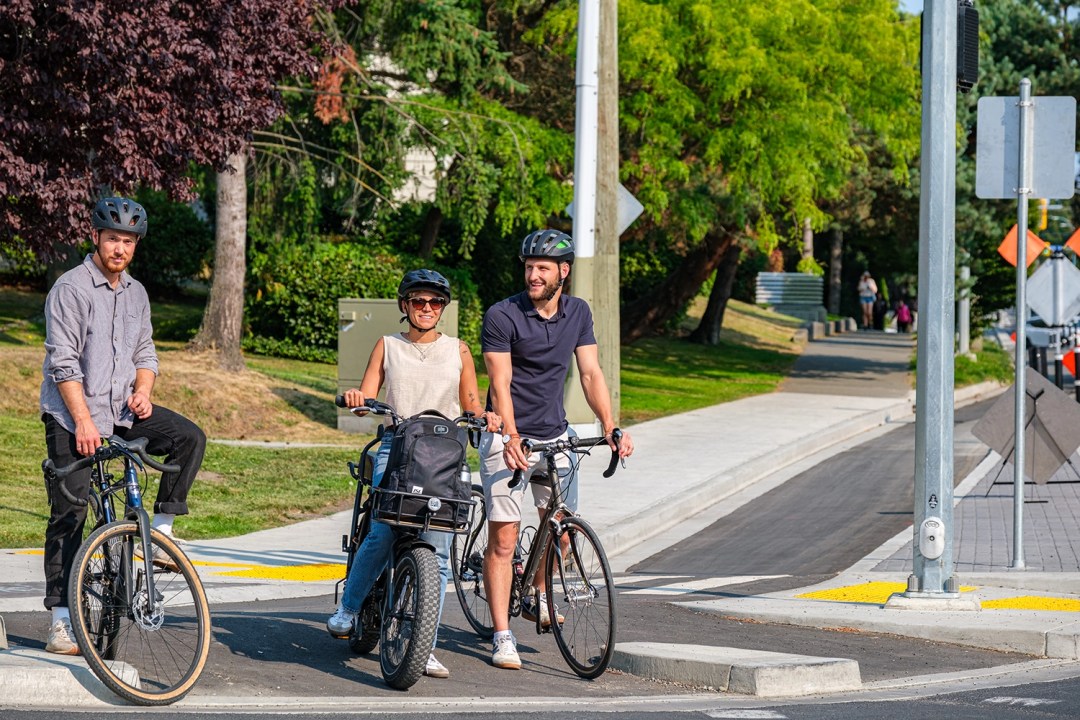
- Intersection Safety: Protected corners and bike turn boxes at Gorge Road and Jutland Road, corner refuge islands on Fort Street, and a new roundabout at Cook Street and Southgate Street, protected turn phases for both left and right turns, and no-right-turn-on-red restrictions.
-
Utility Renewal: The project included replacing a sanitary sewer trunk and watermain on Cook Street to improve seismic resilience, with funding from the federal Disaster Mitigation and Adaptation Fund. The Government Street project also included a watermain replacement using this funding.
-
Green Stormwater Infrastructure: Added where possible to help capture stormwater in flood-prone areas.
-
Rail and transit Interface: Constrained multi-use pathway on Kimta Road adjacent to the E&N railway tracks. Transit stops have adapted over time to better meet emerging standards and prioritize pedestrian access to them.
-
Pedestrian and Public Realm: Landscape and streetscape improvements downtown on Government Street North and Vancouver Street, and continuous sidewalks across side streets on Gorge Road, and use of Tactile Warning Surface Indicators (TWSIs) has grown over time.
-
Full Delivery: Topographic survey, concept refinement, design submissions at 60, 90 and 100 per cent issued for tender (IFT), tender support, contract administration, inspection and closeout.
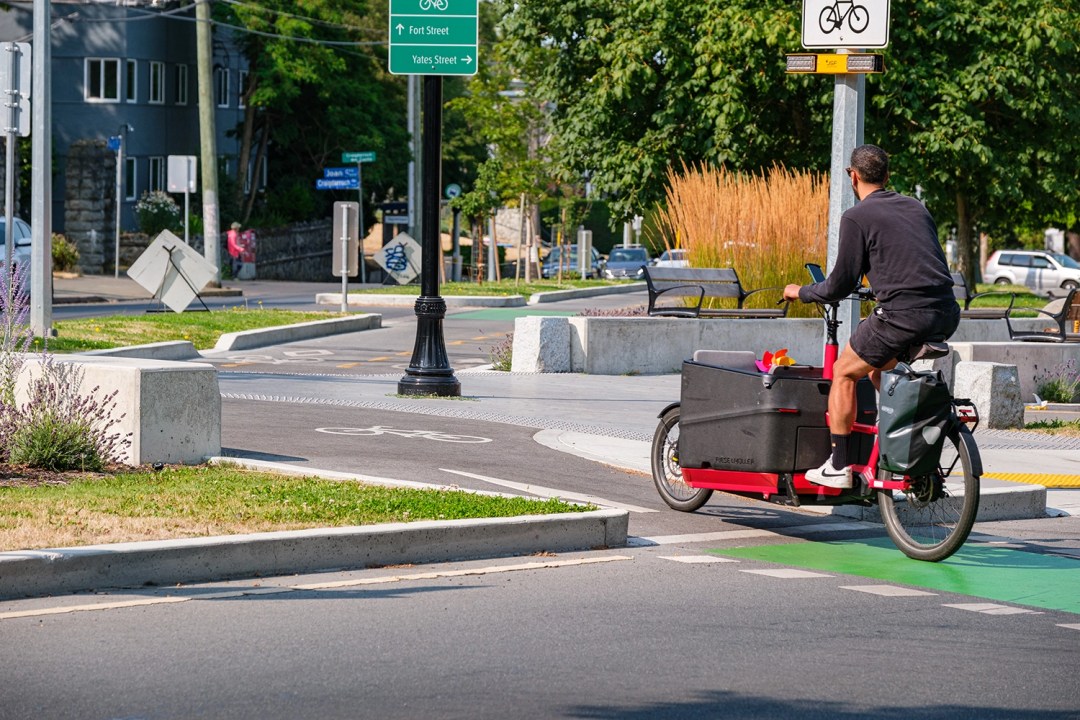
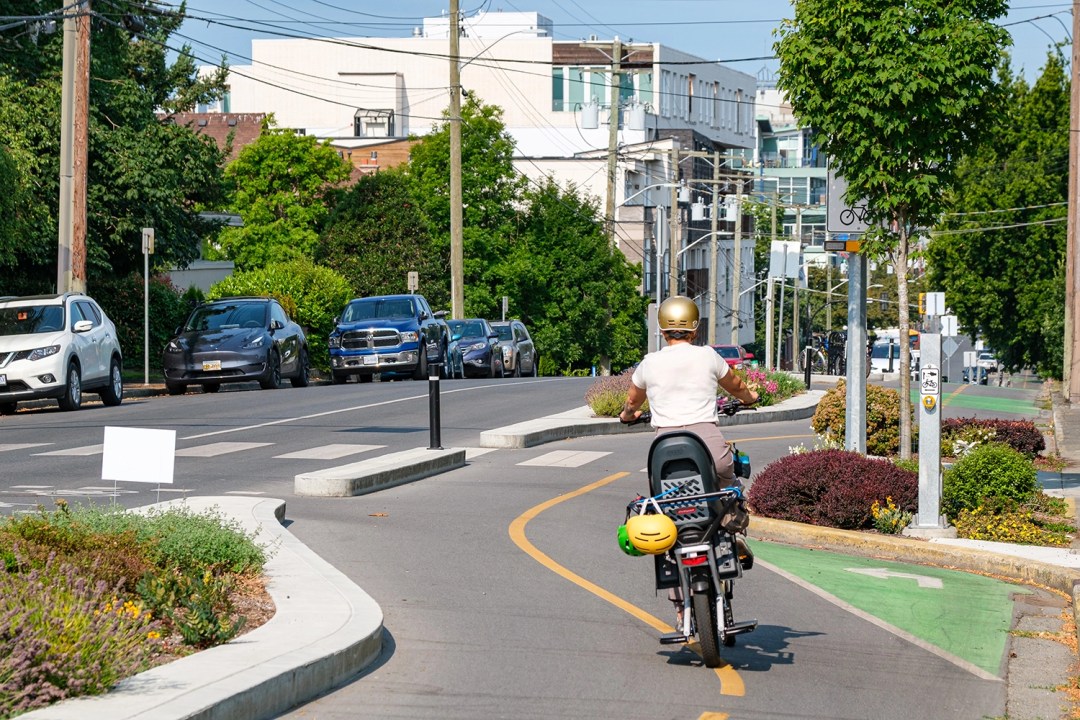
Take a virtual ride around the city and get some further insights about how the City’s AAA bike network came to be with Roy Symons, ISL’s Sustainable Transportation Specialist and Tim Hewett, the Lead Transportation Planner from the City of Victoria in this video with Nic Laporte.
A sequel to this video will premiere at the AT Summit on Friday, October 30th at 2pm focusing on some of the community outcomes from projects like this.