East Sixth Avenue Traffic Safety Improvements
Safer walking, cycling and transit connections to New Westminster’s new təməsew̓txʷ Aquatic and Community Centre.
Client: City of New Westminster
Location: New Westminster, BC
Project Type: Transportation, Municipal
About This Project
With the təməsew̓txʷ Aquatic and Community Centre now open on East Sixth Avenue, the City of New Westminster set out to improve how people reach it. The goal was a safer corridor between McBride Boulevard and Cumberland Street for people walking, cycling and taking transit, with a particular focus on accessibility. A key challenge was designing an island platform bus stop that works for everyone, which called for close collaboration with advocacy groups and people with lived experience of navigating streets with sight loss or impairment.
The project supports Council’s strategic priority of the safe movement of people and advances the City’s climate action goals for a car-light community and a people-centred public realm.
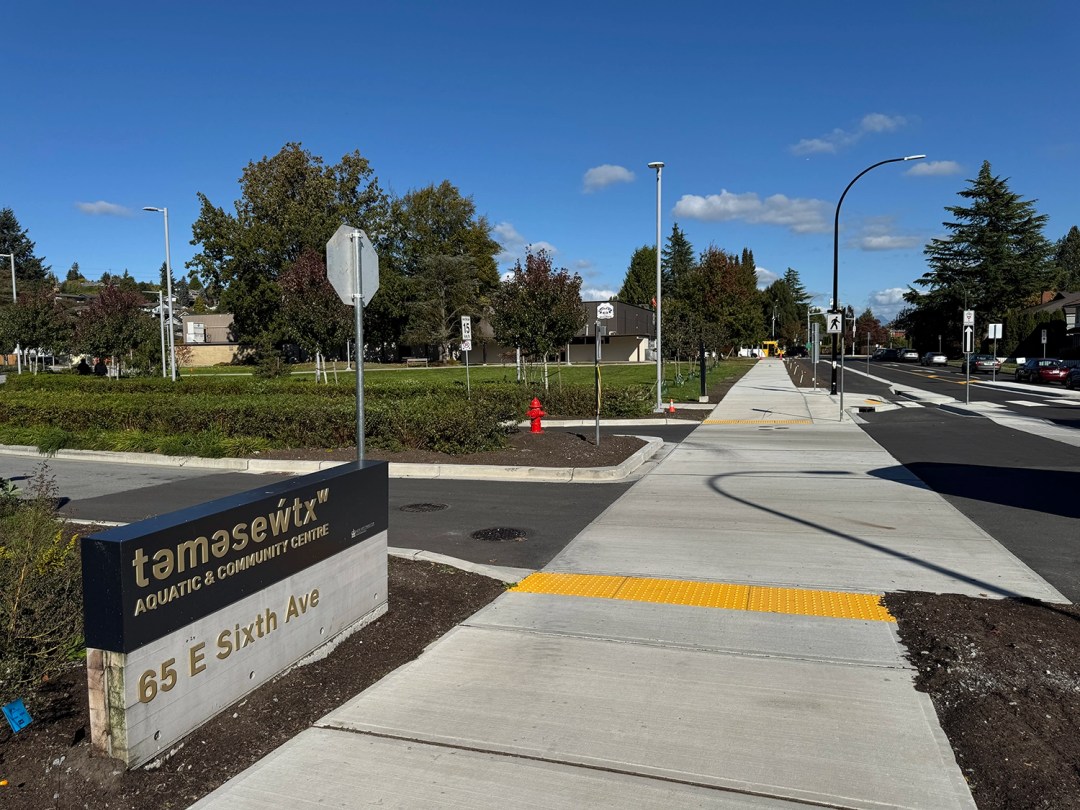
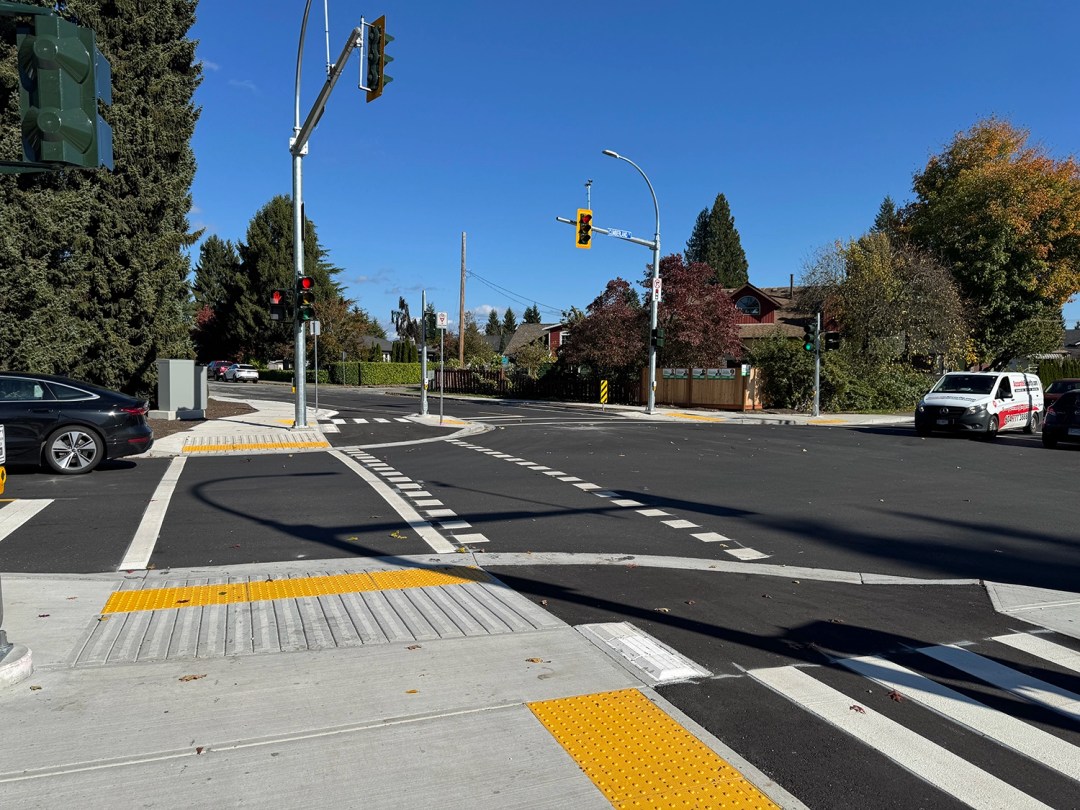
ISL provided off-site engineering services for the corridor. A new traffic signal at Cumberland Street gives people a reliable, safe place to cross and better manages conflicts. The existing signal at McBride Boulevard was upgraded, and new street lighting provided along East Sixth Avenue.
On the north side of the street, a bi-directional bike lane first served as a temporary route around the centre’s construction site while the Crosstown Greenway was closed. The improvements rework it to better accommodate bikes and other mobility devices travelling to and from the centre.
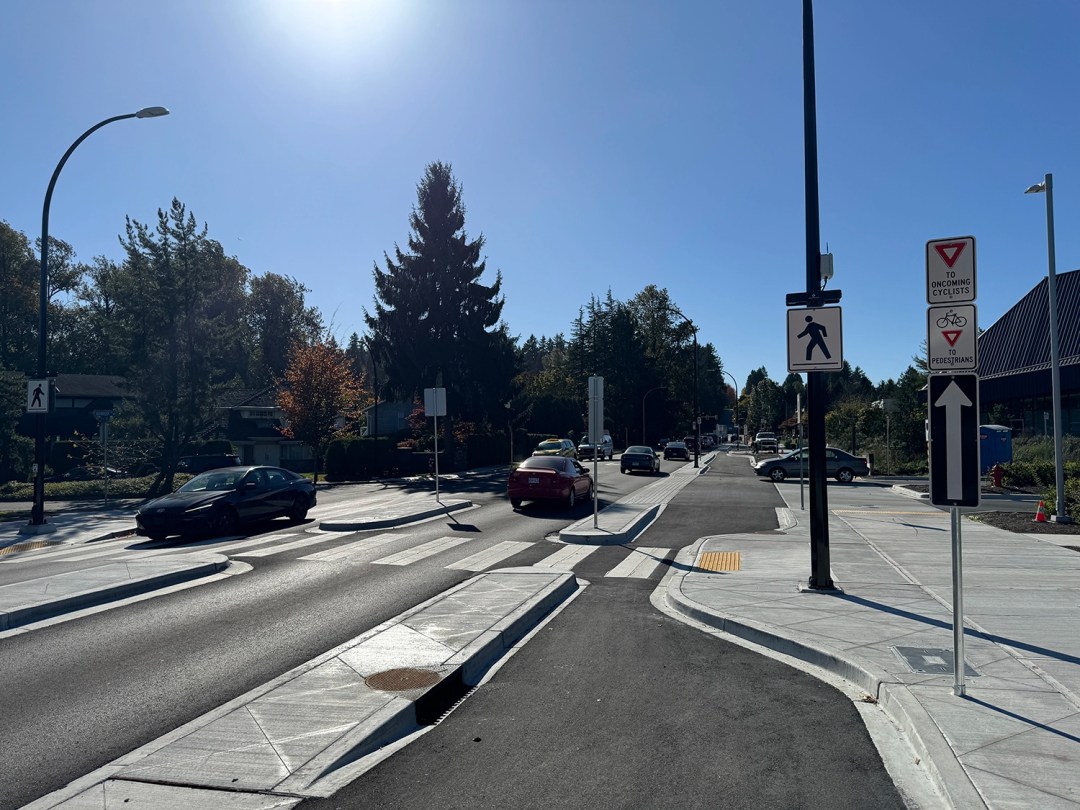
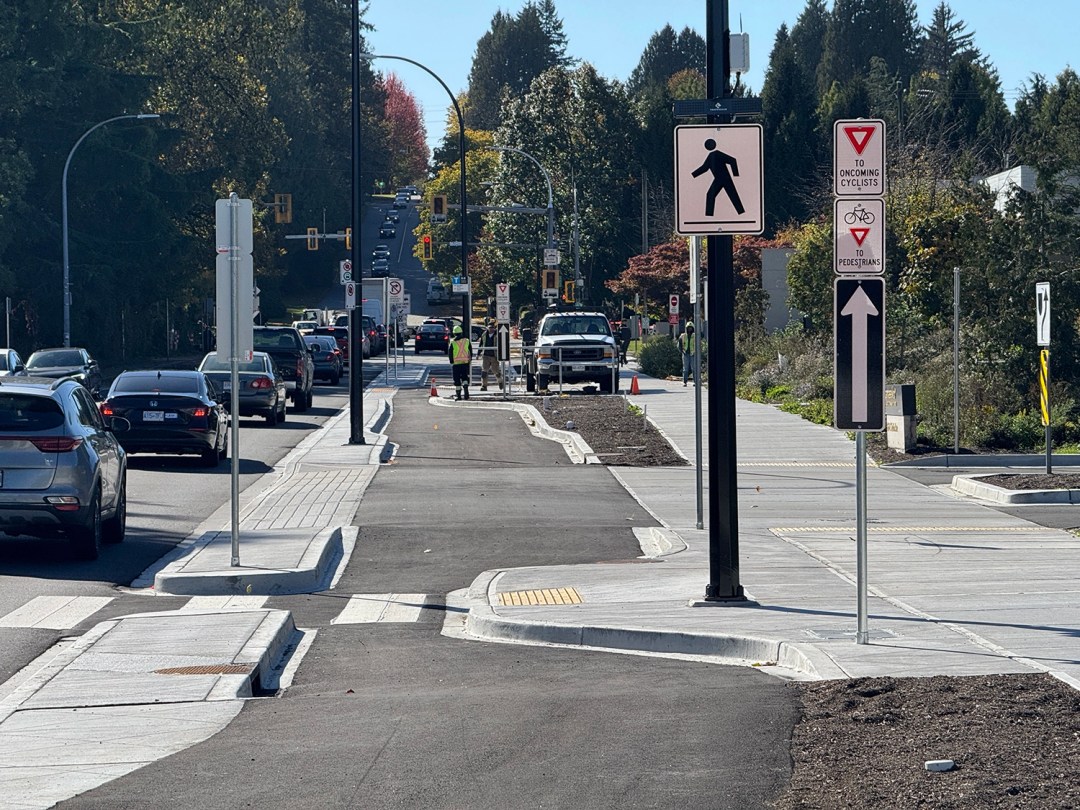
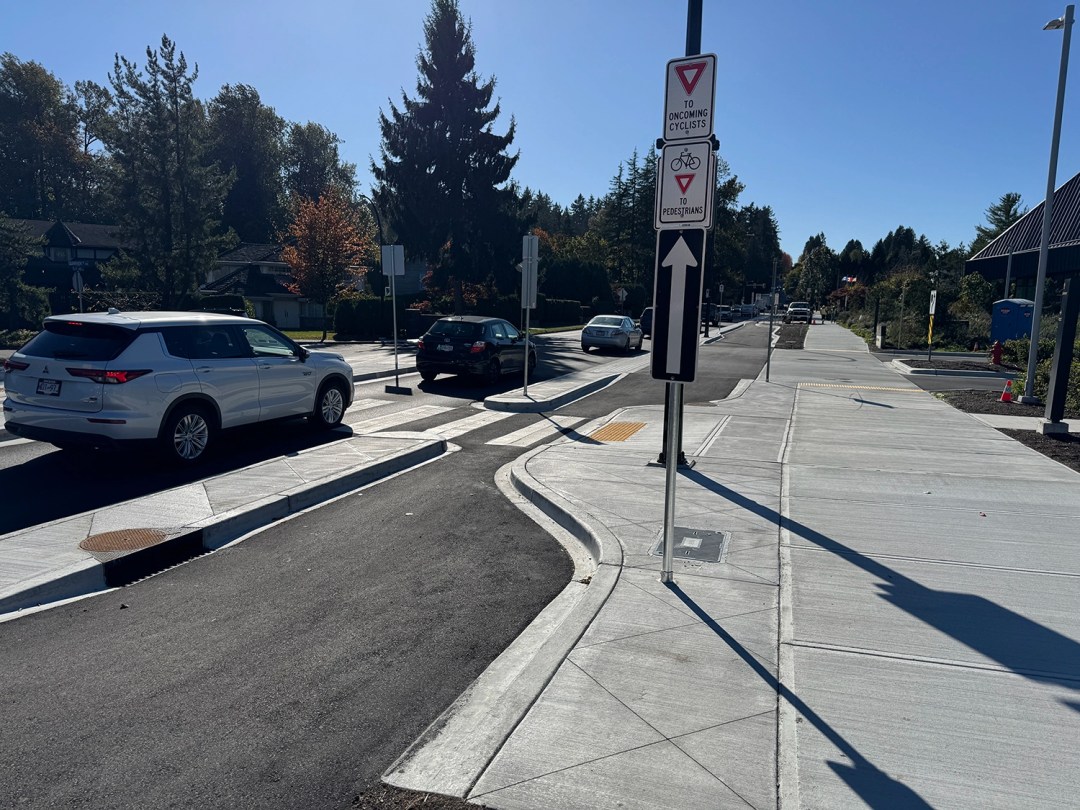
The bus stop beside the centre was the project’s biggest design challenge. Moving it wasn’t an option given transit service needs and the centre’s role as a major community destination, so the bi-directional bike lane had to pass between the stop and the sidewalk. With a growing older adult population in the city, the design needed to work for people of all ages and abilities.
ISL started with current guidance, including the BC Active Transportation Design Guide and TransLink’s direction for bus stops next to cycling infrastructure. The team then went further, working directly with CNIB, the Rick Hansen Foundation and other mobility and vision loss advocates and specialists through on-site walkthroughs and detailed descriptions of existing and proposed conditions. Their input shaped the final design in ways the guidelines alone would not have. One example is the one-way bicycle yield condition where the bike lane passes the bus stop and crosswalk, developed in collaboration with CNIB. It narrows cyclists to a single lane to slow them on approach and improve yielding to people crossing the street or getting on and off the bus. Feedback from participants also led the team to remove tactile features at the bus stop’s rear door, which orientation and mobility specialists noted their clients don’t typically use.
Key Results
- New traffic signal at East Sixth Avenue and Cumberland Street
- Traffic signal modifications at McBride Boulevard and East Sixth Avenue
- Bi-directional bike lane on the north side of East Sixth Avenue, with bike-friendly curb and gutter and bike and multi-use path paving
- New roadway lighting along East Sixth Avenue
- Accessible pedestrian upgrades, including curb ramps and trapezoidal tactile walking surface indicators
- New curb bulges at East Seventh Avenue and Cumberland Street